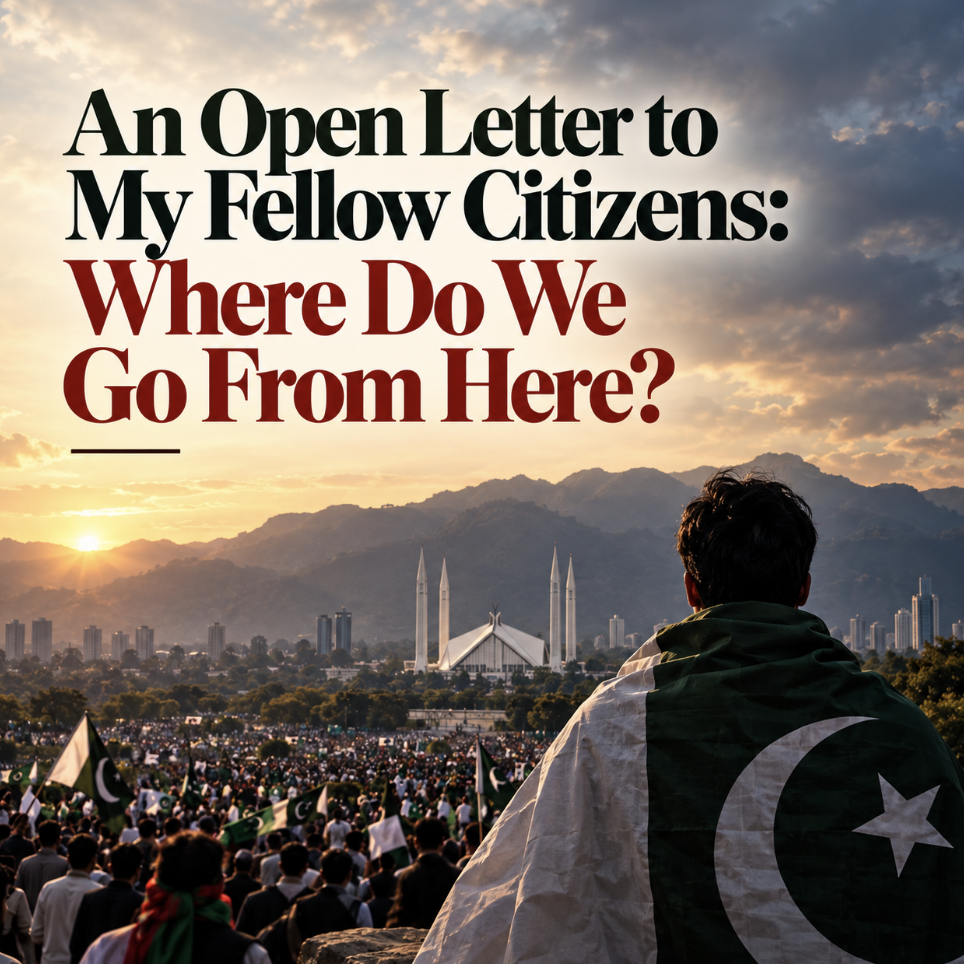
An Open Letter to My Fellow Citizens: Where Do We Go From Here?
Dear fellow Pakistanis,
I am writing in the early hours of October 13, 2026, because I cannot sleep, and because I suspect many of you cannot either.
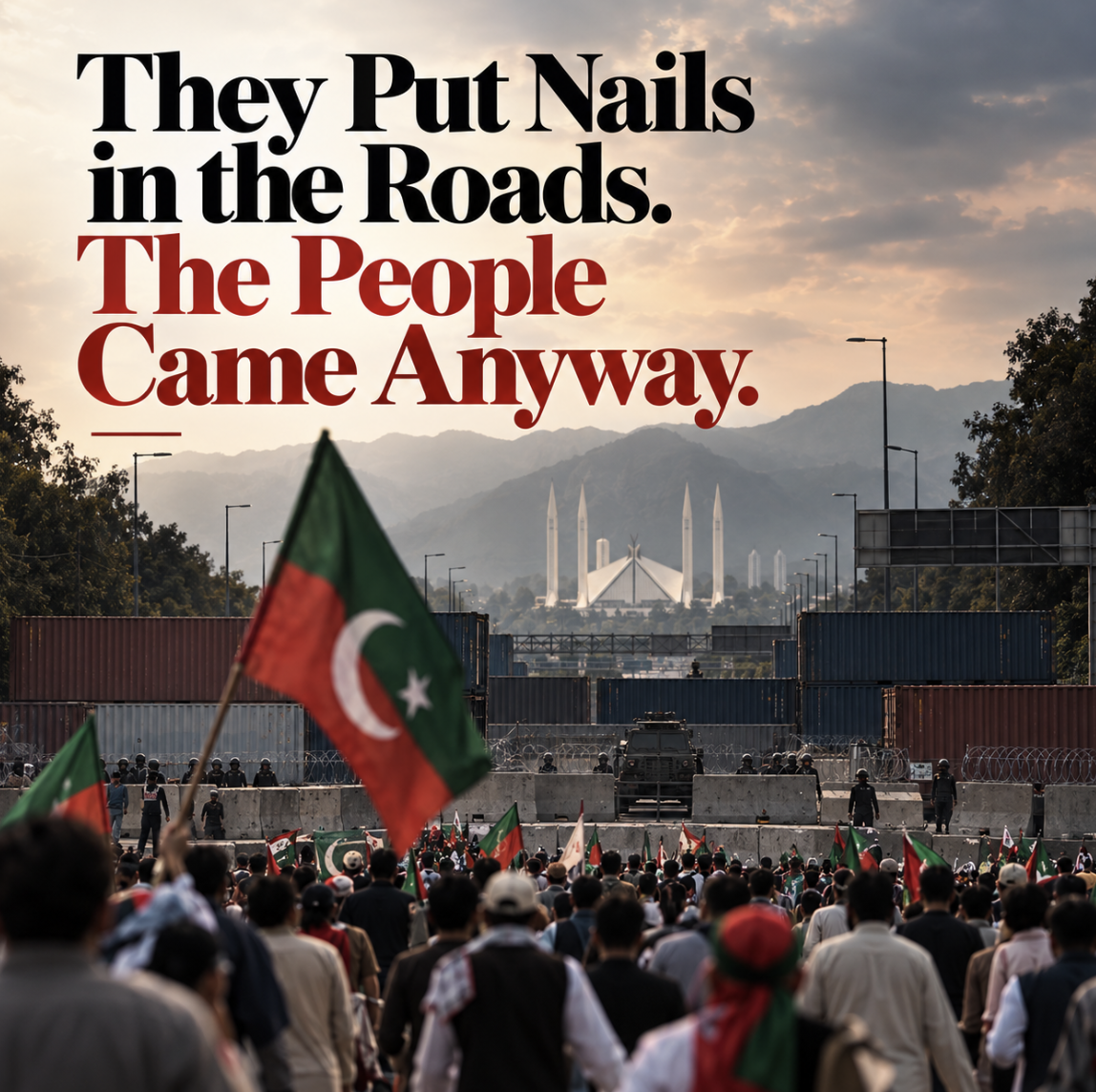
On Sunday, the federal government declared an emergency and imposed governor's rule in Khyber Pakhtunkhwa. The provincial government, elected by the people of that province, has been suspended. The Chief Minister, Sohail Afridi, the Assembly Speaker, and several others were taken into what police call "preventative custody." The army has been deployed in aid of civil power. And all of this happened while a march, one that never even left the province, was still under way.
The government says this was necessary because of terrorism and the collapse of talks on October 3. Many of us see something else: a province punished for its vote, a march stopped before it could reach its destination, and one more chapter in a long pattern of using the machinery of the state against political opponents. Call it what you like. Authoritarian,
heavy-handed, fascist. The label matters less than the fact that a province's mandate was set aside in a single afternoon.
What this moment is, and is not
I want to be clear-eyed. Terrorism in Khyber Pakhtunkhwa is real, and the families who bury their dead there do not need us to remind them. Anyone who dismisses that danger loses the trust of the very people they hope to speak for. But a danger that real demands a plan, a consultation, and a partnership with the province, not the removal of the people's elected representatives. Even sympathetic commentators have noted that governor's rule must explain why existing constitutional machinery could no longer cope. That question has not been answered.
So where do we go?
I do not have a magic answer, and I distrust anyone who claims to. But here is what I believe we can do.
First, stay peaceful. Entirely, always. Every act of violence hands the government the justification it wants. Our strength has never been in force. It has been in numbers, patience, and moral clarity. Let no one provoke us into surrendering that.
Second, take this to the courts and to Parliament. Governor's rule under Article 234 is limited to six months, and Parliament must approve any extension. That is not a technicality. It is a clock, and it is a place where the legality of what has been done can be tested openly. Lawyers, bar councils, and judges who value the Constitution have a role to play now more than ever.
Third, insist on dialogue, even with those we distrust. The October 3 talks failed, but a failed negotiation is not the end of negotiation. Every serious political crisis in our history has ended at a table, however late. We should demand that both sides return to it, and that those in custody be charged openly or released.
Fourth, widen the circle. This cannot belong to one party alone. Lawyers, journalists, traders, students, religious parties, and ordinary citizens who have never cared for politics all have a stake in whether elected governments can be set aside at will. Today it is Khyber Pakhtunkhwa. Tomorrow it could be anyone's province.
Fifth, offer a real answer on security. If terrorism is the stated reason, then the strongest reply is a credible alternative: a plan that protects people and respects the province's elected voice. Silence on that question only helps those who would use it against us.
Sixth, document everything. Every arrest, every closed road, every detained worker, every promise made and broken. History is kind to those who keep records.
A last word
There is no quick exit from this. Anyone who promises one is selling something. But Pakistan has survived dictators, dismissed assemblies, and broken promises before, and each time what carried us through was the stubborn insistence of ordinary people that this country belongs to them.
Let us keep insisting. Calmly, lawfully, and without fear. With hope, and with resolve,
A concerned citizen