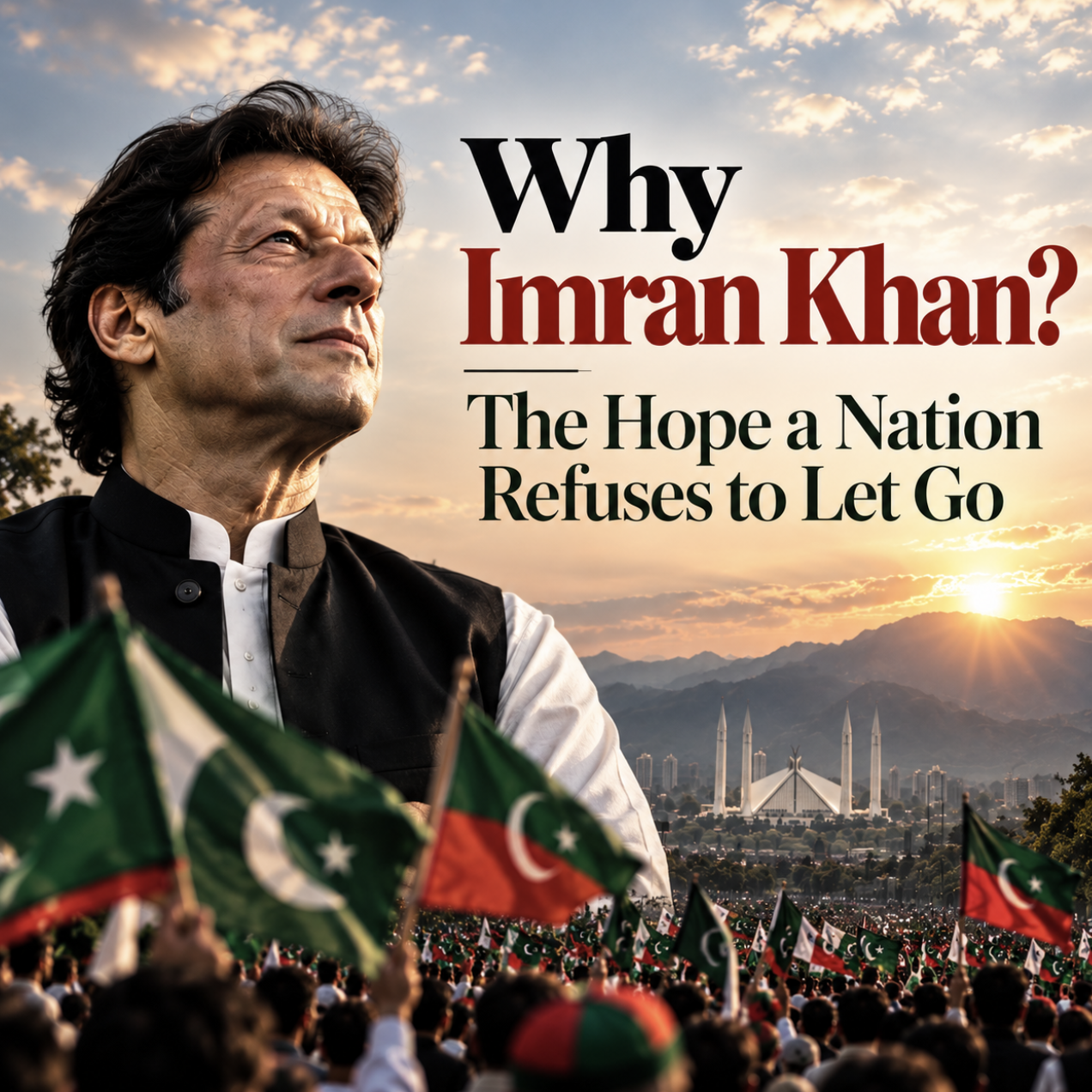
Why Imran Khan? The Hope a Nation Refuses to Let Go
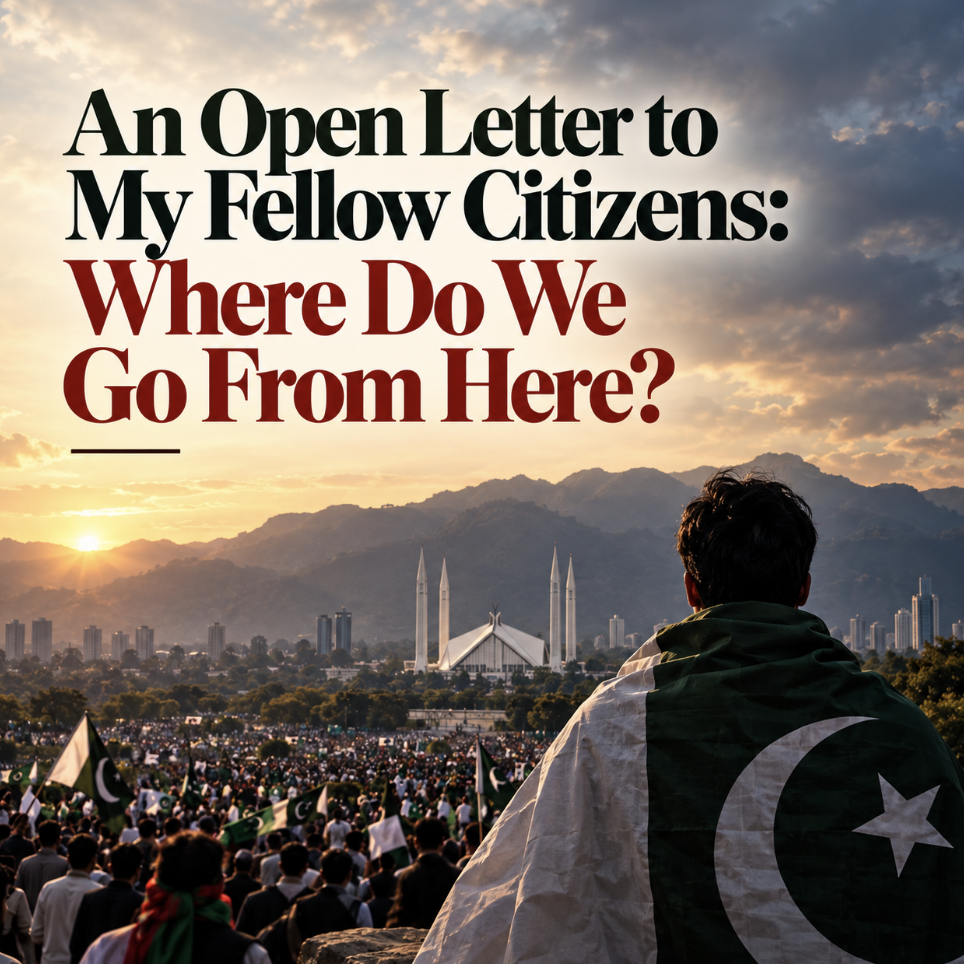
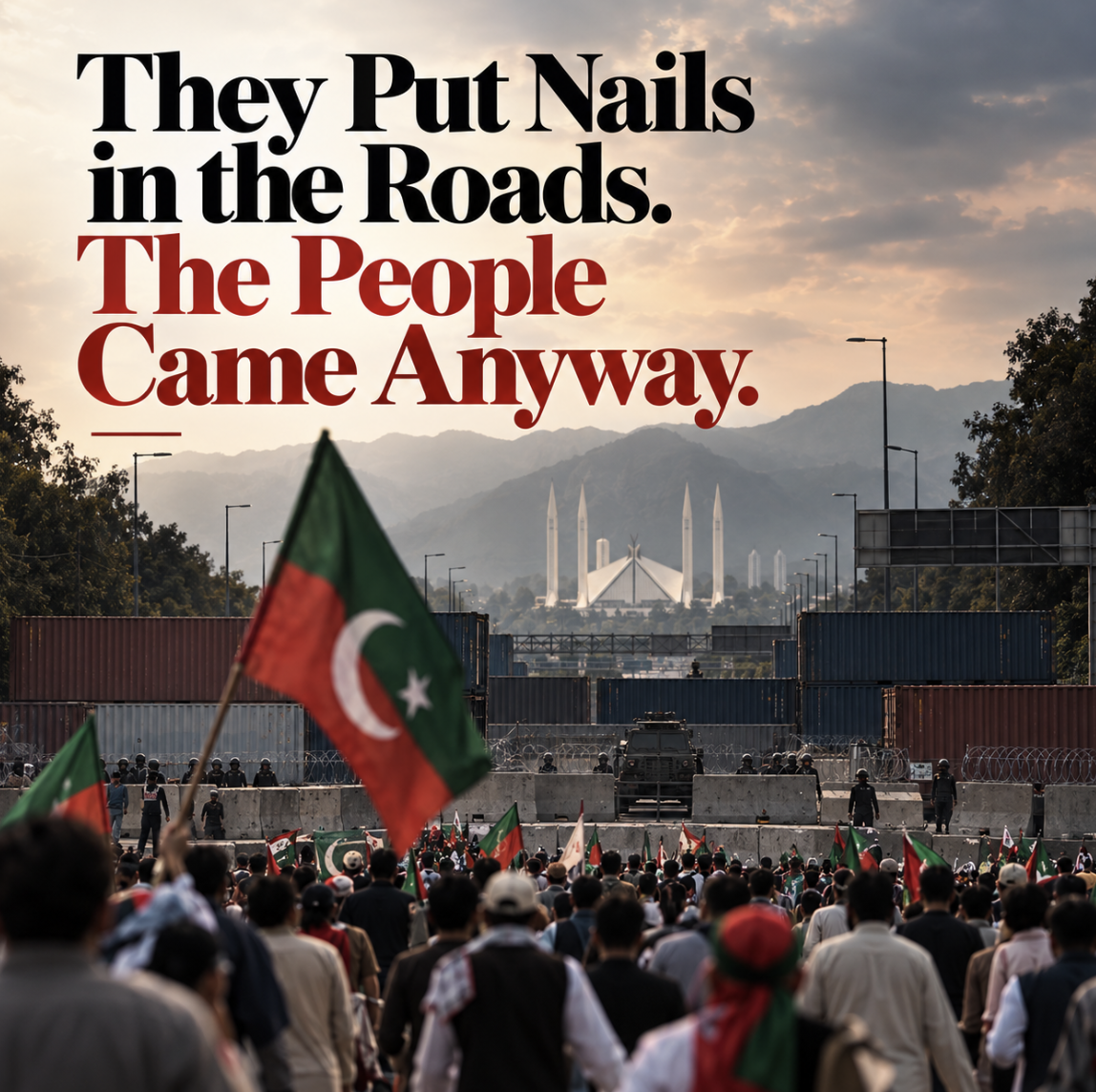
Ask a supporter of Imran Khan why they will stand in a road blocked with containers, why they will march while others close hotels and seal highways, and the answer is rarely about policy. It is shorter than that. They say: he is the only one who made us believe.
To understand why, you have to go back before the cells, the cases and the long marches, to a country that had stopped expecting anything from its rulers.
The Slow Exhaustion of a Generation
Khan founded his party in 1996, and for most of the years that followed, much of Pakistan didn't know what to make of him. A cricketer who delivered the 1992 World Cup, the man behind a cancer hospital built from public donations, now talking about justice and accountability. His promise of a "Naya Pakistan" sounded, to many, like a slogan.
Meanwhile the country's politics ran on a loop. Power passed between the Sharif family and the Bhutto-Zardari family, again and again, for more than three decades. Governments came and went, and the names stayed the same. Supporters of Khan will tell you what that meant on the ground: hospitals without medicine, schools without teachers, a justice system that moved for the powerful and crawled for everyone else. A politics where loyalty to a family mattered more than competence, and where public office seemed to enrich the people who held it.
The charges against those families are well known. The Panama Papers in 2016 named the Sharif children's offshore holdings, and in 2017 the Supreme Court disqualified Nawaz Sharif from office. The Zardari name was long attached to allegations of kickbacks and unexplained wealth. Both families deny wrongdoing, and several of the cases against them have since been dropped or overturned in court. But for a generation that grew up watching the same faces and the same scandals, the verdicts mattered less than the pattern. They were tired. Not tired of politics, but tired of these politics.
The Millennials Who Had Never Voted
This is where Khan's story turns, and where his supporters say the real meaning lies.
The young Pakistanis who came of age in the 2000s and 2010s, the millennials in particular, did not just want a different party. They wanted a different idea of what the state was for. Many of them had never voted, because they saw no point. Khan gave them a reason. He told them that the vote was theirs, that the country could belong to them, and that corruption was not a law of nature but something that could be defeated.
They came out in numbers that surprised analysts: first-time voters, women who had never queued at a polling station, elders who had given up on elections years ago. They did not come out for him, his supporters say. They came out for themselves, for the version of Pakistan they had been told to stop imagining. He was, in their telling, a light at the end of a long tunnel, and they wanted to give hope a chance.
In 2018, that hope became a vote. It was real, and it was shared by millions of Pakistanis of every age and background.
What He Built While He Was There
His supporters answer the question "what did he actually do?" with a list, and it is a long one.
Ehsaas. The Ehsaas programme became the largest social safety net in Pakistan's history, a framework that gathered cash transfers, scholarships, nutrition support and poverty-alleviation schemes under one roof. When COVID-19 hit, the Ehsaas Emergency Cash programme sent one-off payments to roughly 15 million families who had lost income overnight. The World Bank later listed it among the top social protection responses in the world.
The COVID-19 response. Pakistan's "smart lockdown" strategy, targeted closures in hotspots rather than a blanket shutdown, was an attempt to protect both lives and livelihoods in a country where millions earn daily wages and a full lockdown can mean hunger. The Director-General of the World Health Organization, Dr Tedros Adhanom Ghebreyesus, publicly praised Pakistan's handling of the pandemic, with headlines at the time saying the world "should learn from Pakistan." His supporters point out that the country avoided the catastrophic scenes many had predicted.
The Sehat Card. Sehat Sahulat extended health insurance to families who had never had it, covering treatment in private hospitals that were previously out of reach. In Khyber Pakhtunkhwa, coverage was expanded to the entire population, and a family facing a major illness no longer had to sell their land or jewellery to pay for treatment.
The Billion Tree Tsunami. Khan's government in Khyber Pakhtunkhwa planted a billion trees, an effort verified by the IUCN and counted towards the global Bonn Challenge on forest restoration, and later launched the national 10 Billion Tree programme. It also created thousands of green jobs.
Shelter, food and dignity. Panagah shelters and Langar kitchens for the homeless, the Kamyab Jawan programme for young entrepreneurs, the Kartarpur Corridor opening to Sikh pilgrims, and housing and dam projects that his supporters say were meant to outlast any single government.
His supporters also point to the economy's recovery after the pandemic: record remittances and an export rebound in the last full fiscal year of his tenure.
Why They Will Not Let Go
Here is the answer to the question in the title.
Supporters do not follow Khan because they think he is perfect. They follow him because for the first time in their lives, a leader seemed to be on their side. He spoke about them, not past them. And the response they saw from the powers that be, the cases, the custody, the barriers on the roads, the arrests of his party's leaders, only hardened the sense that the establishment was afraid of precisely what he represented: a population that had stopped asking permission.
That is why the movement is not an ordinary party's loyalty. It's something closer to a promise that people feel has been broken by someone else, and which they refuse to hand back. A man in a cell is still, to them, proof that the thing they hoped for was real enough to be locked up.
What They Are Really Defending
Look closely at who fills the roads. It is the young man who voted for the first time in 2018 and has not stopped believing since. It is the mother who stood in line for her Ehsaas payment when the pandemic emptied her kitchen. It is the family whose child was treated at a hospital they could never have entered before the Sehat Card. It is the grandfather who lived through every government since the 1980s and decided, late in life, to hope one more time.
They are not defending a man for his own sake. They are defending the idea that an ordinary Pakistani's vote should decide who rules, that a leader should answer to the poor and not only to the powerful, and that this country can be run honestly. Years of custody, closed roads and broken promises have not weakened that idea. They have made it the most precious thing many of them own.
That is why the answer to "Why Imran Khan?" is never really about one man. He is the name they give to their hope, and a nation does not surrender its hope because it is told to.
Why Imran Khan? Because hope, once given, is the hardest thing in the world to take back.